My books of the year
I have only read thirty-something books this year.
For me that’s news, and a “things that make you go hmm” moment. I have been trumpeting book-reading on this platform for aeons, and 50 books every year was my hard floor for the longest time.
So what gives?
Partly it’s just about getting older. It seems on New Year’s Eve 2024 I quietly crossed a line without noticing. I no longer feel the urge to go wide when seeking knowledge; I want to acquire less and reflect more in this phase of life. The old me of 50-100 books a year seems to have passed. This one wants to know less and understand more. It feels like a natural transition.
There’s another unavoidable truth: time is finite, increasingly so, and AI now lives amongst us. Many hours have been whiled away going deep down many rabbit-holes with my new artificially intelligent companion—and I don’t regret it in the slightest. A book is written once and offers one person’s perspective at a point in time; AI reflects a vast slice of our recorded knowledge, and can be prompted and interrogated endlessly. I now know more about some topics than I have ever done.
As a writer, however, I feel queasy about the paragraph I’ve just written. Am I saying books are the past and AI is the future? Not at all. I plan to write a few more tomes before I’m done. But there is no denying that AI has arrived, and it’s standing in the room with us. I am hopeful the two will coexist; that writers will continue to provide deep, original content; that AI will be the always-on super-smart helper ready to take questions and aid learning—without killing authors by turning them into involuntary donors.
Reading fewer books does make you focus on the ones you really want to read, so this year had some rich pickings. Here are quick reviews of the ones I enjoyed the most.
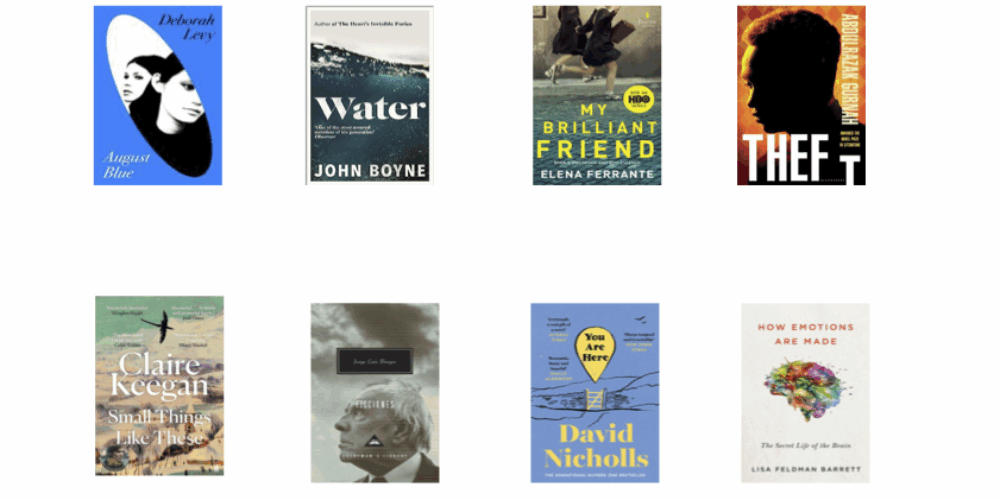
Deborah Levy’s August Blue was immediately captivating. A renowned pianist walks off stage mid-concerto, and the rest of the novel is the tremor that follows from that moment. Art, memory, unbecoming—it’s all there. Elliptical, and elegantly unresolved.
In John Boyne’s Water, a woman runs to the edge of the map, changes her name, and tries to live quietly enough that her past can’t find her. It does, of course, and the book is about what it costs when it arrives. Immersive, thoughtful, quietly gripping fiction.
Elena Ferrante’s My Brilliant Friend was crowned #1 on the NYT “100 best books of the 21st Century (so far).” Is it? No book can be “the best,” but this one earns its applause. Two young girls in 1950s Naples collide, cling, compete, and cut each other open. A raw, violent, tender novel about the interior life of teenage girlhood and the social physics of a city. It will leave its residue on you, like street dust on the tongue.
For me, a new novel by Abdulrazak Gurnah isn’t a purchase, it’s a small ritual, always conducted within earshot of the Indian Ocean. Theft keeps its gaze close: three young lives, tossed by family currents, then jolted by love and loss. Gurnah is a literary master fascinated by the quiet turmoil of human life: who carries the cost, who gets forgiven, who must be grateful. This Nobel laureate doesn’t preach or do outrage; he trusts you to notice and infer, and feel the indictment assembling itself.
Claire Keegan’s Small Things Like These is that rare thing: a perfect, small novel with not a word out of place. We follow Bill Furlong, a coal man doing his rounds in a cold Irish town, helping his wife, going to church, living a life that looks utterly ordinary until one delivery to a convent shows him something he cannot unknow. In this stout, decent everyman, Keegan stages the real drama: what identity and compassion look like when set against polite cruelty and the quiet, communal shrug that lets exploitation thrive. It’s just 114 pages, every sentence honed, and I only breathed out when the final page was turned.
I also have Jorge Borges’s Ficciones in this year’s list. It contains most of the published fiction of this one-off legend. I have read all these stories before and will no doubt read them again. Borges quietly exploded what a short story can be. In his world you get infinite libraries, branching timelines, invented encyclopaedias, fake scholars, and mirrors that won’t stop asking who’s really looking. This is philosophy turned into narrative, smuggling questions about time, identity, and reality into tales that only last a few pages. You can finish one in ten minutes, put it down confused and enlightened, and still be thinking about it ten years later.
Reading a rom-com, who, me? Only if it’s by David Nicholls. The author’s breakthrough novel One Day sold mega-millions and became a Netflix hit to boot. You Are Here is a midlife love story laced into a pair of walking boots. A geography teacher trying to walk off a broken marriage is pushed together with an introverted recluse on a coast-to-coast hike in classic British weather. Two strangers, too many miles, too much rain, two bruised people earning their way back into human connection. Is it still literature when it’s this easy to read? Of course it is. Nicholls has a unique gift for the minutiae of relationships, as well as deep wisdom thrown in. Not to mention a real talent for humour. I know I’m going to love a book when I’ve already laughed out loud many times in the first few chapters.
And finally, just one non-fiction book worthy of mention in my 2025 reads. In How Emotions Are Made neuroscientist Lisa Feldman Barrett calmly walks into the room of received wisdom about the mind and rearranges all the furniture. Her key insight is that emotion does not emerge from fixed switches in the brain; it is constructed in the moment through a manageable process. The payoff is practical: if our inner weather is interpretation, not destiny, then we can learn how to manage the storms better.
Those were my books of the year. Reading them confirmed one thing very clearly: the best of humanity’s authors are indispensable to our future. Writing and thinking this good can never be replicated or replaced by code.
~~~~~~~~~~~
The Signal now takes a holiday break. Back on 4 January 2026.
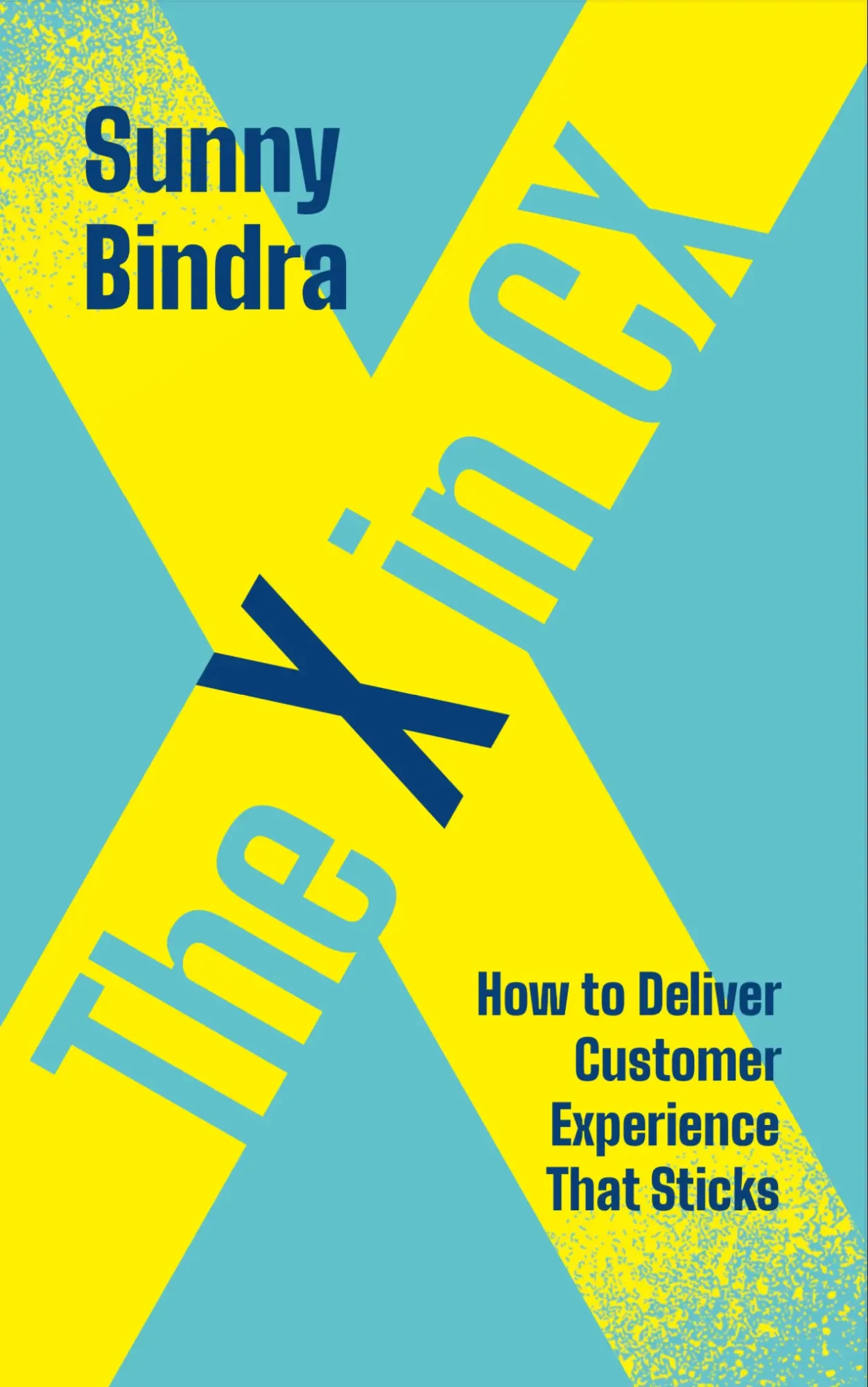
Buy Sunny Bindra's new book
The X in CX
here »

Popular Posts
 Results, not roll callMarch 8, 2026
 Our connection with nature is elementalMarch 1, 2026
 The “Mjuaji” problemMarch 15, 2026
 The idiot testMarch 22, 2026
 You don’t need people skillsFebruary 22, 2026