
Pretty isn’t the product
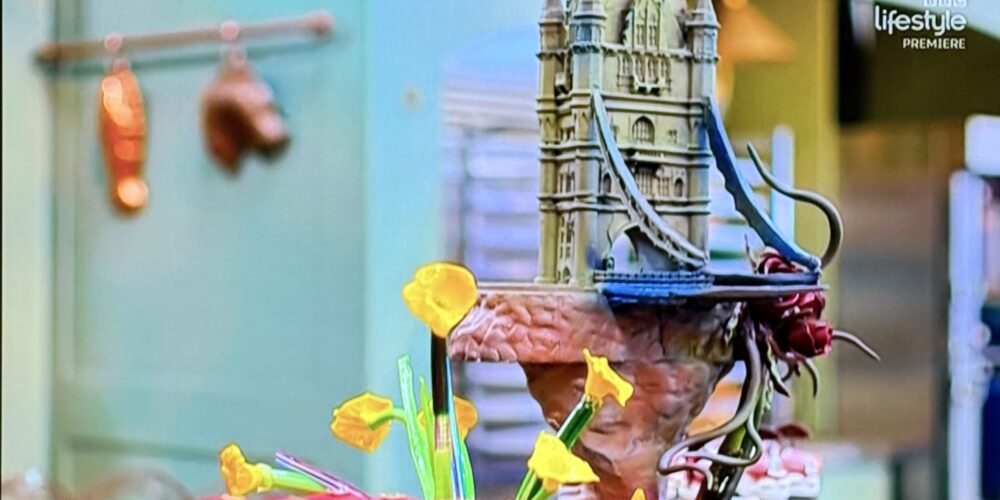
One evening I found myself watching people build cathedrals out of sugar.
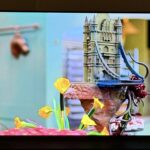
The Great British Bake Off, a phenomenally successful TV show, had reached that familiar moment: the showstopper that isn’t really a bake so much as a table-top construction project. A “showpiece” with a narrative brief: fairyland, iconic monuments, whatever the week’s theme happens to be. Dessert as architecture, in other words.
And almost immediately, the bakers stopped being bakers.
They became improvised engineers, doing anxious calculations in their heads. Would the spun sugar hold, or fold like wet paper? Would the biscuit base bear the load, or snap right at the end?
The results were dramatic. Symmetry, ambition, imagination. The sort of creations that make you lean back in awe. They stood tall. They looked the part.
Then came the tasting.
Polite faces. Careful phrases. The knife went in and the truth came out: dry layers, confused flavours, textures that didn’t sing. For all the brilliance above the table, nothing on the fork made you want a second bite.
Which raises the question: what exactly are we judging here?
This takes me back to a point I make again and again: every craft has a non-negotiable. A core promise. The ONE THING you cannot afford to fumble, no matter how much glitter you pour over the rest.
In food, it’s really very simple: it’s the taste. Not theme. Not storytelling. Not edible lacework. Taste.
Good-looking food is lovely, of course it is. I’m not campaigning against beauty. Plating matters. Design matters. A little theatre never hurt anybody. But taste is the contract. If you break the contract, the rest is decoration pretending to be value.
That showstopper round felt like a neat portrait of a wider habit we’ve picked up: we’ve become excellent at the sculpture, and oddly casual about whether the thing works.
Take leadership. The modern executive world is swimming in showpieces. The vision statement with cinematic music. The transformation programme with a brand name and a logo, as if change requires its own stationery. The culture deck that has all the trendy colours and catchy fonts, while the actual culture downstairs is tired, mistrustful, and brittle.
We keep mistaking presentation for progress.
Real leadership has a taste test. People feel it. They can tell whether you mean what you say. They can tell whether you tell the truth when it costs you. They can tell whether your fairness extends to everyone or just your favourites.
If trust is missing, everything else is sugar work. It will crack the moment the heat rises.
You see it in strategy too. A lot of strategies are showpieces: gorgeous slides, bold claims, heroic arrows. They look great at an offsite. Then Monday arrives, and nobody can answer the practical question: what are we doing differently from today? What’s new, and what’s gone?
A strategy worth eating forces choices. It names what you stand for, and therefore what you don’t. It makes trade-offs explicit, not implied. And it helps ordinary managers make hard decisions without waiting for permission. If it can’t do that, it’s theatre.
Politics is where this disease becomes a full-blown epidemic.
Modern politics is increasingly theatre without nourishment: slogans instead of plans, vibes instead of competence, optics instead of outcomes. The politician becomes a product. The crowd becomes an audience. The country becomes the set.
But a nation’s taste test is brutally unglamorous. Does the queue move? Do public services function? Do the rules apply to the powerful as well as the powerless? Do institutions hold when weight is placed on them? That’s where legitimacy lives, not in a clever speech.
And yes, it shows up in our personal lives too. The curated holiday that hides the loneliness. The busy calendar signalling importance while devoid of meaning. The personal brand polished carefully while the actual days are messy and ugly.
We build beautiful façades, then wonder why we still feel hungry.
So here’s the useful question, across arenas: what’s your taste test?
If you run a business, what would customers miss first if it vanished? If you lead people, what do they experience when you’re not in the room? If you claim to value something, where does it show up when pressure arrives?
Make the sculpture if you want. A little beauty is a gift. But never forget what the work is for.
That’s what is increasingly wrong about our world: we emphasise the look over the legitimacy; fru-fru over fidelity. If it looks good, we begin to forget about whether it actually is good.
THE SIGNAL IN THE NOISE
Don’t applaud the scaffolding. Taste the cake.
Buy Sunny Bindra's new book
The X in CX
here »



Popular Posts
 Snakes and Ladders, AKA your lifeJanuary 25, 2026
 How things fall apartFebruary 8, 2026
 Pretty isn’t the productFebruary 1, 2026
 Why the third generation might ruin everythingFebruary 15, 2026
 Make this your year of being boringJanuary 4, 2026