

Why the third generation might ruin everything
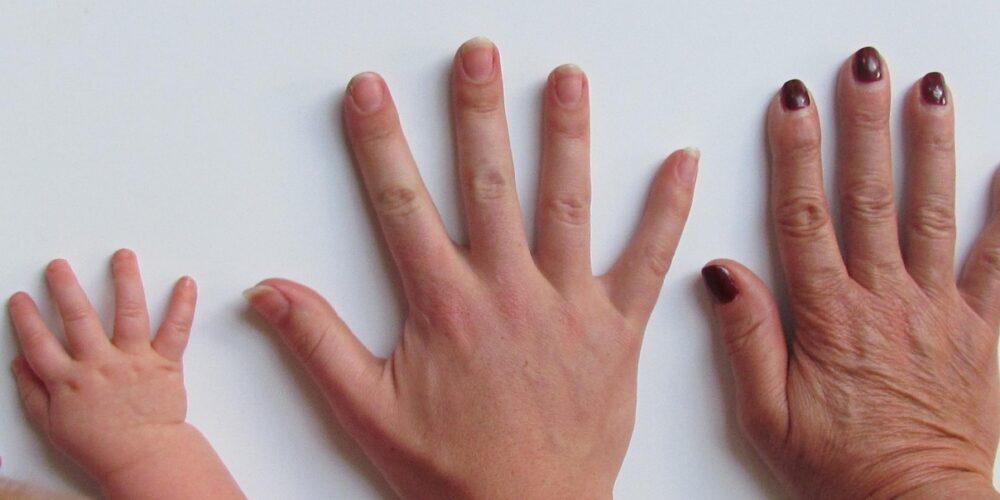
Granddads’ hands are usually quite rough. Grandkids’ are mostly soft.
And that’s the Buddenbrooks Effect. The label comes from Thomas Mann’s 1901 novel Buddenbrooks, which chronicled a merchant family’s decline across generations. Ever since, it has been shorthand for a familiar pattern in family enterprise: fortunes often thin out after about three generations.
The founders build; the children consolidate; the grandchildren consume.
Early caveat: this is an observed pattern, not a law of physics. Three generations may be too neat, and a family’s survival or decline of course depends heavily on circumstance and context. Some families renew; some implode. Luck matters, the industry matters, the state of the world matters.
Still, the drift is common enough to deserve attention. Successors do indeed tend to stray into comfort or quarrels. Privilege dulls necessity. Comfort reduces urgency. A life that begins with too many options can become allergic to discomfort. And the attributes that built the first empire—grit, endurance, ambition, hunger —quietly corrode into caution, entitlement, internal politics, or plain boredom.
Gen 1 fights chaos, Gen 2 fights competitors, Gen 3 fights…boredom.
Comfort becomes the silent saboteur. Every hard dynasty eventually meets a soft sofa, and the sofa wins.
There’s also a structural problem that has nothing to do with character. Family businesses dilute. One founder becomes six cousins. Six cousins become twenty shareholders. The enterprise doesn’t just pass down; it spreads out. Decision rights blur. Accountability dissolves into a white-noise haze. Everyone has an opinion. Few people have a clear job. Fewer still have consequences.
Gen 1 had very little, needed to escape poverty, ran for miles. Gen 3 is born into preferences, sensitivities, anxieties, and safety. That world can produce brilliant people, of course, but it is not naturally tuned for risk-taking, speed, innovation, or renewal. Stagnation arrives quietly, wearing the disguises of prudence and affluence.
And the pattern isn’t confined to bloodlines. Institutions do their own three-generation dance. Political parties, NGOs, tech upstarts: insurgency, then establishment, then self-protection. The problem isn’t family DNA. It’s cultural drift. It’s the slow replacement of earning with inheriting, of building with managing, of boldness with preservation.
So what to do if you want the third generation to be stewards, not spectators?
Start with entry. Make it earned, not endowed. Require serious work outside the enterprise first. Make people learn to be managed before they are allowed to manage. And if they enter the business, start them closer to the ground than the boardroom.
Next, don’t neglect the governance. You can’t extend the freewheeling ways of the founder into future generations and not expect a slow-motion mess. Who decides what, and why? Who controls the whims and wackiness of the new-gen leaders? Draw clean lines between ownership, oversight, and management. The boring stuff matters.
Next, bottle the culture while it is still alive. A founder should not leave behind a legend. They should leave behind a handful of simple, non-negotiable behaviours that everyone understands and can call out in real time. No fru-fru. Just everyday habits that protect standards, humility, pace, and customer obsession.
Finally, never treat your strategy as a museum of past glories. Yesterday’s playbook is not scripture. What made you win in granddad’s time is very unlikely to drive your later glories. Strategy must change as the world changes. Principles and standards can be timeless. Business models rarely are. Strategy must stay live, not ceremonial.
Because the real enemy isn’t the third generation; it’s comfort without obligation. Wealth without a weight attached to it. Soft hands that never have to build anything real.
If you want your dynasty to last, keep one thing alive in every generation: the feeling that something still needs building.
THE SIGNAL IN THE NOISE
Inheritance is easy. Renewal is work.
Buy Sunny Bindra's new book
The X in CX
here »




Popular Posts
 Results, not roll callMarch 8, 2026
 Our connection with nature is elementalMarch 1, 2026
 The “Mjuaji” problemMarch 15, 2026
 The idiot testMarch 22, 2026
 Who put feelings in charge?March 29, 2026