

You don’t need people skills

I love it when Tom Peters goes on a rant.
The famed management thinker and author returned recently to X after a break, and came out swinging at a term most of us treat as harmless: “people skills.”
What could possibly be wrong with people skills, you might ask? Aren’t we all looking for them in our leaders, and isn’t it an enlightened position to take, to appreciate those who can relate, listen, connect? Those who are good with people should be valuable, right?
Ahem. Tom hates the term, and he considers it inhumane. Why? Because what exactly are these skills? Treating someone kindly. Listening properly. Caring, really caring. These are not techniques to be acquired. They are how human beings are meant to behave.
So don’t “hire for people skills,” he says. Hire decent people. Hire thoughtful people. Hire the ones who listen more than they talk. He had some choice epithets for the people-skills brigade, which I’ll spare you here.
I retweeted it immediately because I agree wholeheartedly.
When we label basic decency a “skill”, we turn character into a corporate elective. Something you can pick up after lunch on Thursday, earn a badge for, then go back to being a menace by Monday morning.
That rebrand has consequences.
First, it gives bad behaviour a back door to keep its job. As long as the offender attends the right workshop, learns the approved vocabulary, and performs the warm nod at the right moments, the organisation can pretend progress is being made. If you turn character into a KPI, don’t act surprised when it comes back smelling like perfumed PowerPoint.
Second, it encourages theatre. Eye contact. Mirroring. The careful “I hear you” tone, delivered while the calendar says “I’ll ignore you.” People can sense the difference between care and choreography.
Third, it feeds an entire ecosystem that would love you to believe your problem is a capability gap. Courses, certifications, frameworks, badges. But a lack of basic decency is rarely cured by fancy wrapping. You can’t package kindness to make it real. That takes actual work.
And let’s name the deeper issue: if your organization is “low on people skills”, that’s not a training puzzle. It’s a leadership reveal. Culture is what you tolerate. Culture is who you promote. Culture is who gets protected because they “deliver”.
Humans are not toner cartridges. They are not things you use up, throw away, and replace. When leaders treat people like components, don’t be shocked when the place starts to feel like a machine with loose bolts and no soul.
Now for the twist that should make this urgent.
AI is about to raise the premium on being fully human. The bots can do the performance; the humans have to do the humanity. As machines get better at outputs, our edge must shift to ethics, care, judgement, restraint, empathy. Those aren’t skills; they’re choices, practiced daily. They don’t arrive via a certificate.
This isn’t a sermon. It’s operational reality. Decency reduces the usual bad stuff: friction, rework, politics, attrition, customer pain. Trust speeds everything up. When care is already in the room, meetings get shorter, feedback gets cleaner, handovers stop dropping, and people stop spending half their energy protecting themselves from one another.
Care is actually a competitive advantage.
So let’s retire the phrase “people skills.” Tell your hiring team to look for good humans. Then act like you mean it, in what you reward, what you tolerate, and what you refuse to excuse.
THE SIGNAL IN THE NOISE
Stop certifying care. Start rewarding it.
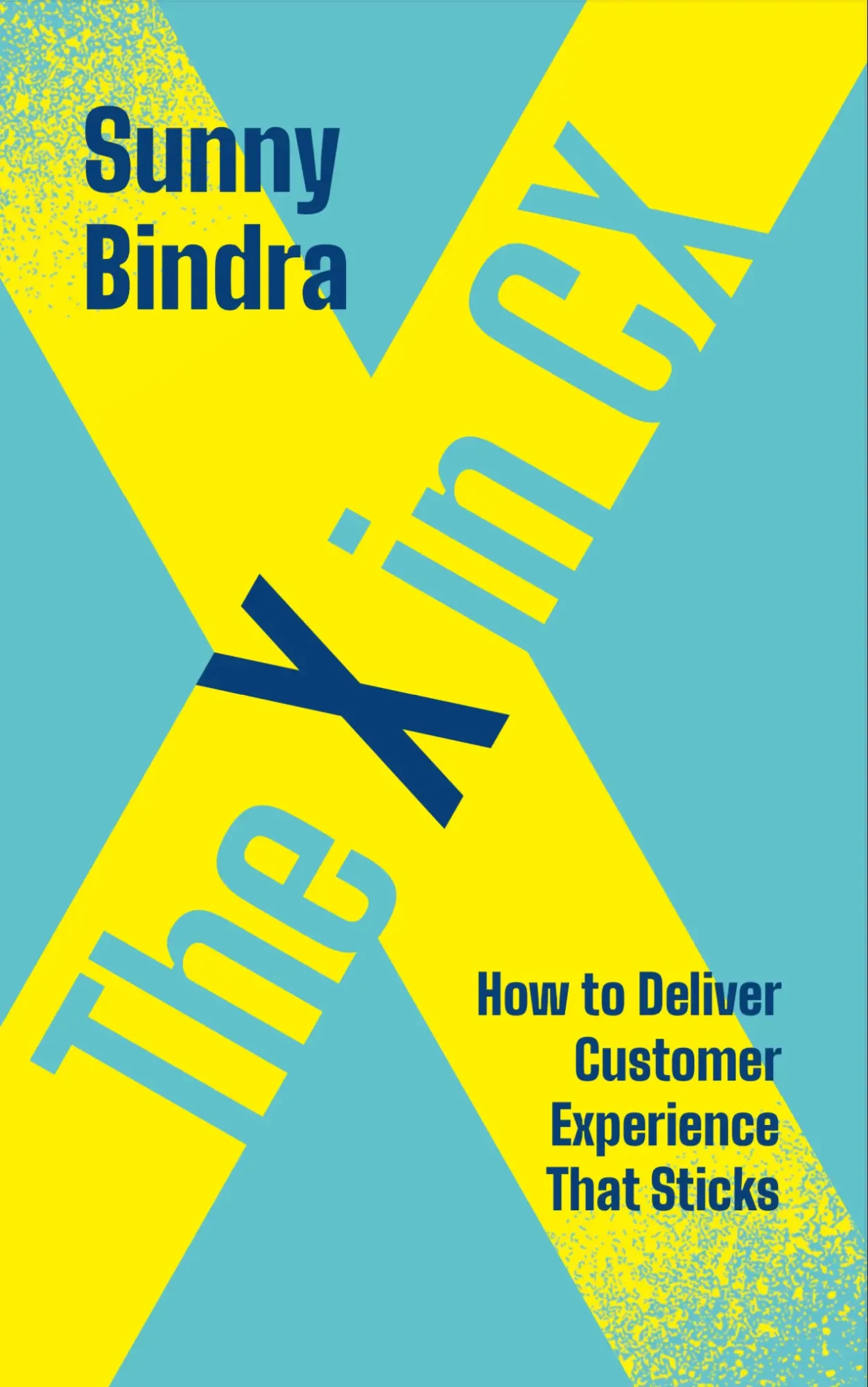
Buy Sunny Bindra's new book
The X in CX
here »




Popular Posts
 Results, not roll callMarch 8, 2026
 Our connection with nature is elementalMarch 1, 2026
 You don’t need people skillsFebruary 22, 2026
 Why the third generation might ruin everythingFebruary 15, 2026
 The “Mjuaji” problemMarch 15, 2026