

The idiot test
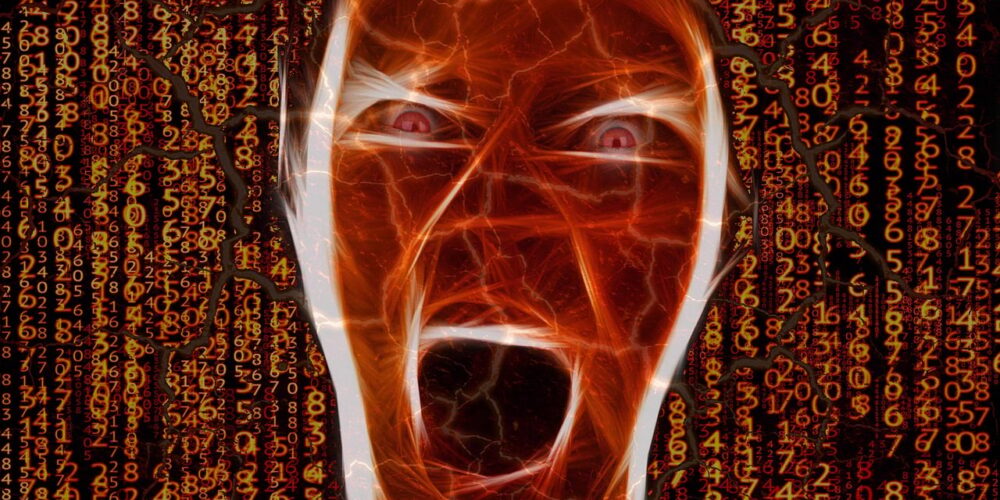
Is there a foolproof way to spot an idiot?
You might think so, but J B Pritzker, the governor of Illinois, observes that some idiots can dazzle you with words and misdirection. They can get promoted above you. They can even get elected president!
He was speaking at Northwestern University’s commencement in 2023, where he pointed out that we all nonetheless need an idiot detection system. His way? Look for the person who’s cruel.
His reasoning is that suspicion comes naturally to us, because it is part of our evolutionary survival instincts. “When we see someone who doesn’t look like us, or sound like us, or act like us, or love like us, or live like us, the first thought that crosses almost everyone’s brain is rooted in either fear or judgement or both.”
Empathy and compassion, on the other hand, are highly evolved states of being. We have to overcome our animal instincts in order to be kind. Pritzker’s point is that those whose path to success is marked by acts of cruelty have failed the first test of advancement. Their brain is still stuck in primal instincts. It is kind people who possess creative thinking and imagination. The cruel are too suspicious, too willing to inflict pain, to ever become generous.
Kindness is often a sign of cognitive horsepower, because:
It takes imagination to see the world from another angle.
It takes confidence to be generous.
It takes patience to teach instead of punish.
It takes long-term thinking to build people rather than break them.
Of course, cruelty can also be planned, even trained or incentivized. But as a fast heuristic for character, cruelty is often a sign of low emotional range, lazy judgement, and weak self-command. Cruelty is often a tell. Not always, but often. It’s frequently a sign of low social intelligence, even when someone has a high IQ.
First, it’s strategically dumb. Cruel people burn trust, trigger revenge, shrink candour, and make others hide information. In any complex system (teams, families, states), that’s self-harm dressed as dominance.
Next, it’s emotionally lazy. Cruelty often replaces thinking. Instead of doing the harder work (diagnose, negotiate, persuade), the cruel person reaches for humiliation or threat.
And it signals weak self-command. If someone can’t manage their own impulses, they’ll eventually mishandle power.
So “idiot” here doesn’t mean “uneducated”. It means “unsafe with complexity”.
What we should really watch out for are those who delight in cruelty (they enjoy it); who are contemptuously cruel (they see others as lesser); who rationalize cruelty (there’s a reason for their viciousness); and who are repetitively cruel (it’s a pattern, not a bad day).
The truly sad thing in the world today? The cruel ones have risen to power in so many countries. They are inflicting mayhem and carnage on others. Their actions may be clothed in fake virtue and flawed strategy, but make no mistake, these folks run on the oldest fuel: fear, hate, prejudice. They trade in venom and vitriol, because they have no higher thinking.
So here’s a more usable idiot detector: don’t get taken in by charm, vocabulary, or résumé shine. Watch what happens when a person has a little power and someone weaker is in the room. Do they default to respect, or do they reach for humiliation? Do they correct with dignity, or do they punish for sport?
THE SIGNAL IN THE NOISE
Use kindness as a competence signal, and cruelty as a warning label.
Buy Sunny Bindra's new book
The X in CX
here »



Popular Posts
 The mathematics of a good lifeSeptember 27, 2026
 We’ll all have to think againSeptember 13, 2026
 CX that’s all tech and no soulSeptember 20, 2026
 When nothing goes wrong, but you’re still in troubleOctober 4, 2026