

What the past is for
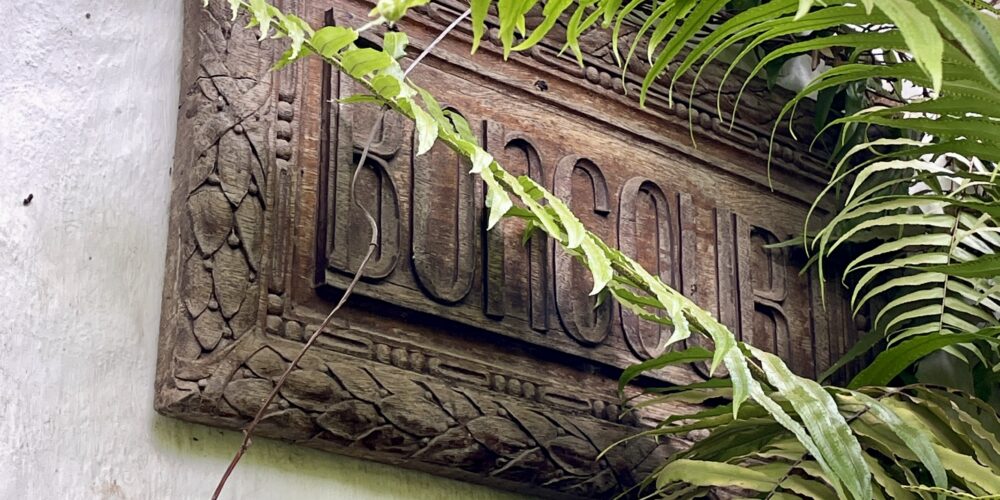
I recently had to move out of a house my family had occupied for nearly a quarter of a century. It was a lovely old house from a bygone era, standing proud for more than 90 years. It had a Mediterranean vibe, with whitewashed walls and colourful creepers, and Italianate details and flourishes from another age.
Our son was born there, and spent his entire childhood playing and growing within those thick walls and stained glass windows. The garden, a flourishing, billowing thicket, was the last refuge for many of the birds in an area that has had its trees uprooted in the name of progress.
We were, you can imagine, quite troubled to leave. On handover day our neighbours, also long-term tenants, came to reminisce and relive. Tears flowed freely.
We are somewhere else now, newer and quieter. For many days the pang of moving on was acute, with memories of what was left behind flooding into every thought and conversation. The experience has allowed me to think long and hard about the nature of nostalgia.
We look back often, do we not, on the people and places that really mattered to us. And that is right and proper. It is a question of giving honour to what was important. But there is also a trap hidden in there: the temptation to keep living inwardly in a place or time that has already released us.
Nostalgia has a good name because it begins in love. It tells us that something mattered. That a place held us, that a season formed us, that certain people and rooms and rituals became part of our inner architecture. To feel that pull is to offer tribute. A good past deserves gratitude.
But nostalgia has a dark little trick. It can persuade us that because something was precious, it must also remain central. It can turn memory into preference, preference into resistance, resistance into paralysis. We stop honouring the past and start kneeling before it.
Life asks movement of us. We dishonour the past when we turn it into a permanent address.
The same thing happens to organizations, even nations, when they become sentimental about earlier versions of themselves. The founding era. The glory years. The old culture. The business model that once delivered big. That memory can be useful if it helps recover values, identity, standards, craft. But it turns dangerous when leaders start worshipping old forms rather than old strengths. Then nostalgia becomes strategy’s taxidermy shop: the creature is beautifully preserved, and entirely dead.
We often defend habits that no longer serve, markets that have moved on, symbols of success whose meaning has drained away. Nostalgia then ceases to be remembrance. It becomes refusal.
The past should be visited with respect, not used as a hiding place. In life, as in strategy, maturity lies in carrying forward what was finest without insisting that the old world return intact. Honour it, learn from it, thank it. Then keep walking. There is much to be done and much to look forward to at every stage of life.
So bye-bye, Boncourt. A curious old name for a curious old house. The bulldozers will arrive soon, and your sturdy, much-loved walls will give way. But demolition is not erasure. You will endure in the memory of the lives you held. We honour you, even as we move on.
THE SIGNAL IN THE NOISE
The past deserves reverence, not residence.
Buy Sunny Bindra's new book
The X in CX
here »




Popular Posts
 The mathematics of a good lifeSeptember 27, 2026
 CX that’s all tech and no soulSeptember 20, 2026
 When nothing goes wrong, but you’re still in troubleOctober 4, 2026
 Must everything have a purpose?October 11, 2026