

Who put feelings in charge?
“How are you feeling?”
It is one of the commonest questions we ask one another. We ask it lightly, lovingly, anxiously, habitually. At home, in hospitals, after a hard meeting, after bad news, after an awkward silence. It has become one of the stock phrases of human concern.
How we feel now carries immense authority. Feelings are treated as clues, but often also as verdicts. If I feel hurt, depleted, offended, unseen, anxious or joyful, that feeling can quickly become the central fact of the moment. We are encouraged to “honour” it, “trust” it, “sit with” it. Sometimes all that is wise. Sometimes it becomes a little too reverential, as though our emotional life were a high court from which there can be no appeal.
This is where Mark Manson’s provocation is useful. He has argued, in effect, that emotions are overrated.
That sounds harsher than it is. He does not mean emotions are worthless, or that we should become wooden creatures who stalk the earth with deadpan faces and clenched jaws. His point is narrower and sharper. Emotions are signals, not wisdom. They tell us that something is happening, not necessarily what that thing means. Fear may alert us to danger, but it can also be a false alarm. Anger may point to injustice, but it can just as easily be bruised ego in costume. Excitement may feel like destiny being realized, but it could just be a superficial response to novelty.
That strikes me as broadly right. Our feelings are real, but they are not always reliable. They are shaped by fatigue, temperament, old wounds, insecurity, vanity, physical stress, chemical weather. They rise fast, speak loudly and often demand action before thought has had time to put on its shoes.
And yet I would stop short of becoming too smug about this. There is also a fashionable way of dismissing emotion that is just as shallow as worshipping it. Feelings may not be final truth, but they are still data. Sometimes precious data.
They tell us where we are tender. They tell us what unsettles us, what we long for, what story we may be telling ourselves about the world. If envy appears, it may be saying less about another person’s life than about some neglected corner of our own. If anger keeps flaring, perhaps a boundary has been crossed. Or perhaps pride has. If sadness lingers, perhaps something in us needs attention rather than suppression.
So perhaps the sensible conclusion is not that emotions are overrated full stop, but that they are often overpromoted and underexamined. We either bow before them or brush past them. Both moves are too quick.
The better move may be slower and less dramatic. Feel the feeling, certainly. But then ask a few impertinent questions of it. What exactly are you reacting to? What else might explain this? Is this old pain borrowing today’s clothes? Is this feeling revealing something true, or merely something raw?
That small habit could save us from a great deal of nonsense.
Feelings are compelling. They arrive with theatre. They make everything feel immediate, urgent, self-evident. But anyone who has lived a little knows how often a mood can distort the room. A thing can seem unbearable at night and manageable by morning. A slight can feel monumental in the moment and faintly absurd a day later. Intensity has a talent for masquerading as truth.
What might this mean for us in practice? Maybe just this: feelings deserve respect, but not automatic obedience. They should be listened to, but cross-examined too. We do not need to be ruled by every passing inner weather pattern. Nor do we need to pretend we are above it all.
The real work, I think, lies in creating a sliver of space between feeling and response. In that space, we regain some authorship. We remember that while we cannot always choose our first feeling, we are not entirely helpless about the second thought and the next step.
THE SIGNAL IN THE NOISE
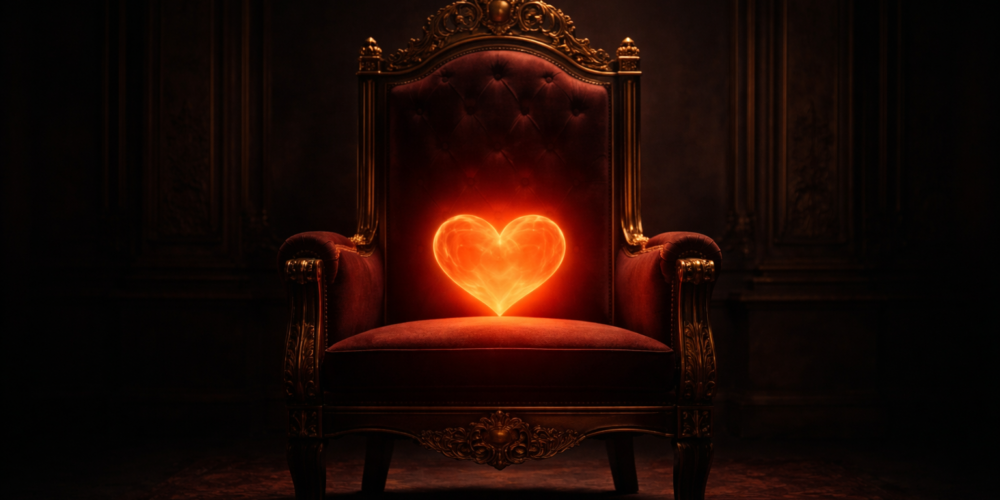
Give your feelings a hearing, not the throne.
Buy Sunny Bindra's new book
The X in CX
here »




Popular Posts
 Results, not roll callMarch 8, 2026
 The “Mjuaji” problemMarch 15, 2026
 The idiot testMarch 22, 2026
 Who put feelings in charge?March 29, 2026
 Our connection with nature is elementalMarch 1, 2026