

Must everything have a purpose?

Must we all have a purpose? An overriding reason to be alive, a life mission that we must somehow discover and fulfil?
Once upon a time, most of us just lived and got through our lives any which way. Few of us were expected to have a grand purpose. But in this hyper-connected existence, we see what others are up to every day and feel we, too, must have a cause driving our lives.
But small-p purpose is just fine. We all have, indeed need to have, interests, duties, loves, work, curiosities, relationships, pleasures, responsibilities. These things shape our lives and give us reasons to do difficult things.
The problem is with the capital-P Purpose. This is much more heroic. We must exist to give, to help, to inspire, to catalyse. This kind of Purpose must be articulated in an emotionally resonant sentence, ready for LinkedIn.
That creates a peculiar burden. If you cannot name your purpose, you are somehow drifting and aimless. Work that is merely useful and pays the bills is not sufficiently meaningful. Just enjoying being with family or friends is not enough. Loving your garden or your books or your travels, and working hard around those loves, is too much about you. You have to have a grand design connecting it all.
I recently watched writer and speaker Rupert Spira say on YouTube, with disarming honesty, that he does not do his work in pursuit of some grand ulterior goal. He just does it. Partly because he loves it, and partly because he fell into it due to circumstances. If that work is helpful to others, wonderful. But he doesn’t work every day in order to improve the world.
And that’s just fine.
Maybe most of us don’t need a Purpose. We just need many purposes. Small-p, plural, temporary, ever-changing, and sometimes contradictory.
In our twenties, many of us are preoccupied with knowing our place in the world, through new friendships and relationships, and through nascent careers. At 40, raising children may become a priority purpose. Later on, both the pursuit of financial security and spiritual uplift can consume our days. Humans are multipurpose tools, with different implements for different stages of life.
Depending on how lives work out, sometimes our purpose is just to get through grief, or recover from illness, or keep a business alive, or help organize our families. Anything wrong with that?
Kierkegaard famously observed that life can only be understood backwards. Most lives are not lived according to the demands of an early mission statement. We live and grow, and patterns show up later. Do one worthwhile thing, and then another, and eventually a shape emerges.
This is true for me. Looking backwards, I can say my life’s work has been about simplification and demystification. That’s what has driven my writing, teaching, speaking. But was that my purpose when I started working? Not at all. I just worked, for the money, the validation, the growth. Eventually the meaning began to appear, when a pattern was visible. My articulation of purpose is a late-stage realization.
If individuals must be seen to be heroes, why should companies be left behind? Now every corporation needs a Purpose. It’s not enough to brew good beer, connect people usefully, lend money intelligently, or run clean hotels. We must empower, transform, unlock, reimagine, and somehow make the world better.
Why don’t we just demonstrate our usefulness to the world rather than declare a performative capital-P Purpose? Because the latter is way easier. Talking about purpose can take the place of doing good things.
A person can talk about their purpose endlessly while treating everyone around them badly. A company can plaster a noble purpose across every wall and web page while squeezing all its suppliers, manipulating its customers, polluting the earth, and degrading its employees.
Perhaps the real purposes of our lives are not to be declared; they are to be inferred, from how we lived and behaved.
My earlier book, The Bigger Deal, had a chapter entitled “Start with Purpose.” I would change that title if I could. The point of the chapter remains: that becoming clear about what we live for can result in great achievements. Iconic figures have pulled off tremendous feats, apparently guided by a driving purpose. But now I wonder: did they start there, or end there?
THE SIGNAL IN THE NOISE
Just be useful. You don’t have to be heroic.
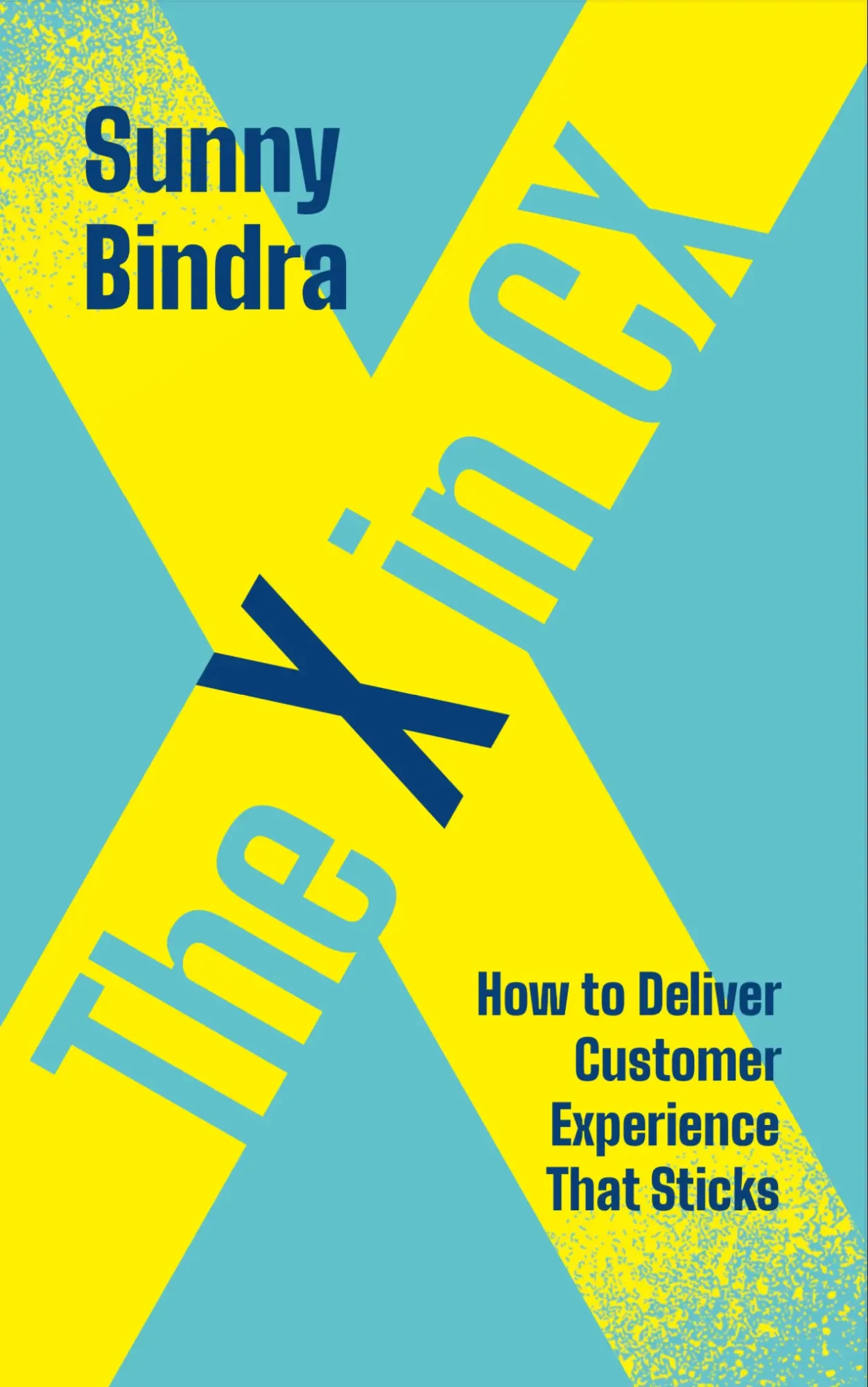
Buy Sunny Bindra's new book
The X in CX
here »




Popular Posts
 The mathematics of a good lifeSeptember 27, 2026
 We’ll all have to think againSeptember 13, 2026
 CX that’s all tech and no soulSeptember 20, 2026
 When nothing goes wrong, but you’re still in troubleOctober 4, 2026