

CX that’s all tech and no soul

After visiting the UK recently, I conclude this: if there’s one thing this kingdom is united in these days, it’s delivering poor customer experience.
Yes, CX@UK really sucks, and for a simple reason. The humans have been removed from it.
Wherever you look, the machine is displacing the person. Staffed tills are mostly gone, replaced by self-checkout scanners. In the biggest and formerly best stores, you will be hard-pressed to find a helpful person. The remit is clear: search for stuff by yourself, carry it around by yourself, try it on by yourself, check out by yourself, pack everything yourself, carry it out by yourself. Try not to ask questions. If you don’t see it, we don’t have it. If you’re not sure, try our website. Cheerio.
Marks & Spencer is a venerable British institution, part of the background imagery of the kingdom, a national treasure. It’s recently come out of a long period in the doldrums, and found new verve and style in its offerings and new fizz in its fortunes.
The CX, though? I recently observed the situation in one of its biggest London stores. A tiny handful of overworked, harried shop assistants struggling to breathe. Long queues at checkout, which no longer offers even one till manned by a human. Multiple issues at the scanners: barcodes not reading, security tags impossible for a shopper to remove, payments requiring authentication. A single, overwhelmed floor walker running from one customer to the other, fixing their glitches.
And please note, this is the UK, a rapidly ageing society. Many people trying to check themselves out are elders unfamiliar with technology, unable to learn it fast enough, and often too infirm to pack their own goods. I watched one beleaguered assistant literally do the entire process for one oldster after another.
So what was the point of removing the old system of human tills, if the new way takes longer and is extremely annoying? I put this question to the besieged assistant after he had paused to draw breath from being cashier, carer, troubleshooter, tag remover, and technology tutor. He admitted he had no idea.
Let me state the point clearly. Too many businesses have placed all the burden of CX work onto fewer and fewer assistants. And, even worse, onto customers who are now doing the work the business should do. Why do this? Lower headcount, baby! We make more moolah more quickly by getting more for less. We call this a productivity gain in our numbers, ignoring the fact the old work is still being done, it’s just being done for free by overworked workers and over-burdened customers.
Encouragingly, M&S has itself said that the purpose of new AI tools should be to free employees from routine tasks so that they can spend more time serving customers on the shop floor. Now that I can get behind. Godspeed, chaps.
Many UK businesses have been taken over by private-equity investors and institutional shareholders who can put enormous pressure on boards to pursue exactly this sort of business model: fewer people, more locations, bumper returns. Five years and out. Many retailers and restaurants are PE-funded chains now: efficiently replicable and scalable. All spreadsheet and no soul.
Why should 142-year-old M&S be thinking like this, though? Hollowing out might yield remarkable profits for five years, but it will not build the next 150. No matter how efficient the tech becomes, retailing is, at heart, an activity between humans. The smile, the welcome, the chat, the banter, the helpful advice, the concern—it’s all core to the CX. As I write in my book, The X in CX, selling is fundamentally done by humans to other humans, and friendly interactions make all the difference in the world.
But because that takes time to show up in the numbers, impatient business owners miss the point. I’m not indulging in an anti-tech screed. Technology that removes waiting, remembers preferences, finds stock instantly, speeds payment or frees staff to help customers is excellent CX. Technology that removes company cost while increasing customer effort is something else entirely. And self-checkout isn’t inherently poor CX. A good retailer gives me a machine when I want one and a human when I need one. Removing the second option is not innovation; it’s lazy and short-sighted.
During my short London sojourn, I did come across a few businesses really delivering the smiles, and it was such a pleasant relief to be greeted, assisted, and guided. I returned to those shops and eateries, and looked away from the ones that tried to offload all their work on me.
Smiles matter, but my more important proposition is that businesses mis-measure productivity because they count their own saved labour while ignoring customer effort, frustration, abandonment and lost loyalty. Those costs don’t arrive neatly labelled. They seethe and simmer and arrive later, when the customer stops coming.
So don’t be the retailer that proudly saves three minutes of employee time while consuming ten minutes of customer time and calls it efficiency. What looks economically ingenious can turn out to be experientially bonkers.
THE SIGNAL IN THE NOISE
Cut the friction, not the human connection
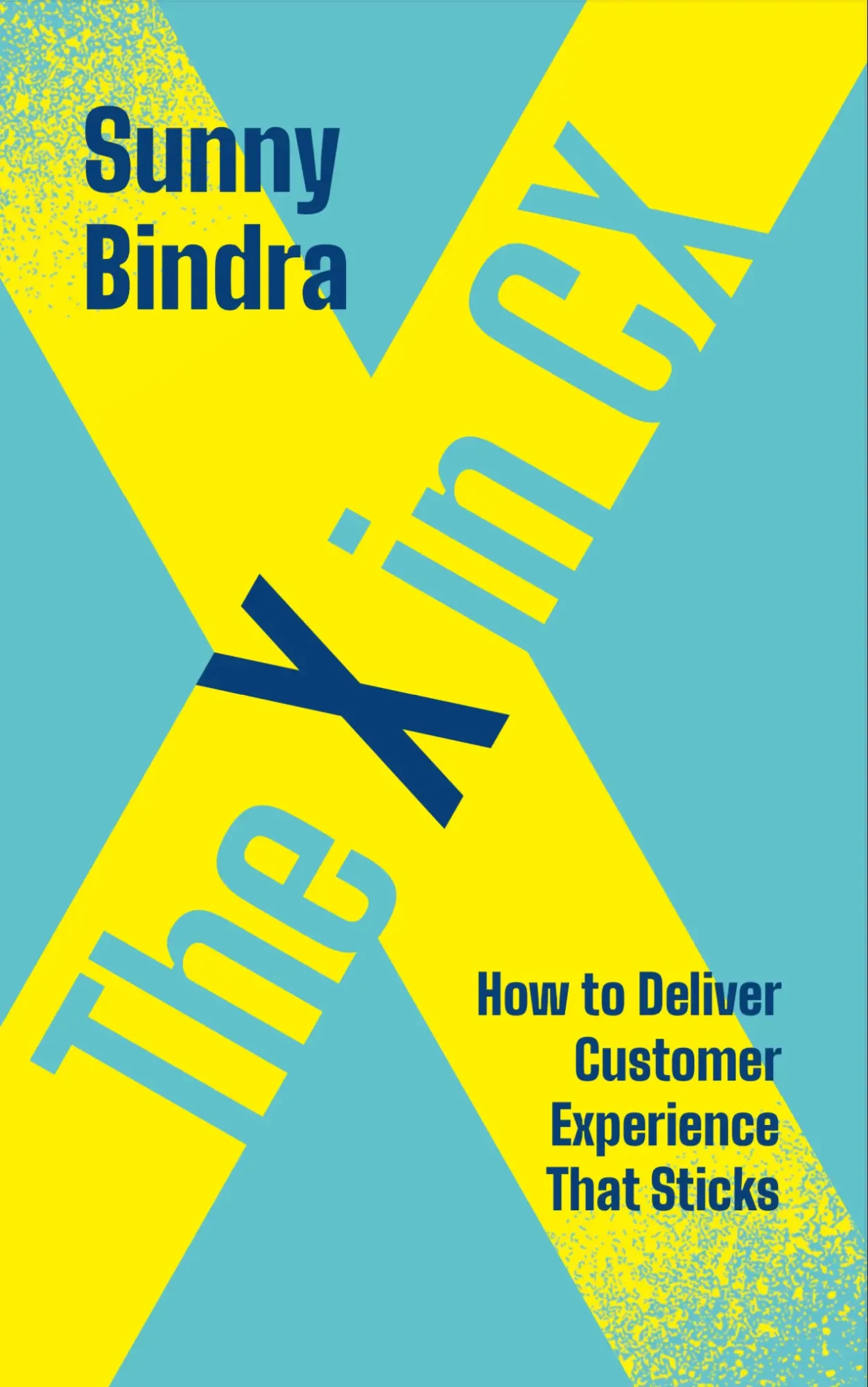
Buy Sunny Bindra's new book
The X in CX
here »


Popular Posts
 The mathematics of a good lifeSeptember 27, 2026
 We’ll all have to think againSeptember 13, 2026
 CX that’s all tech and no soulSeptember 20, 2026
 When nothing goes wrong, but you’re still in troubleOctober 4, 2026