

We’ll all have to think again
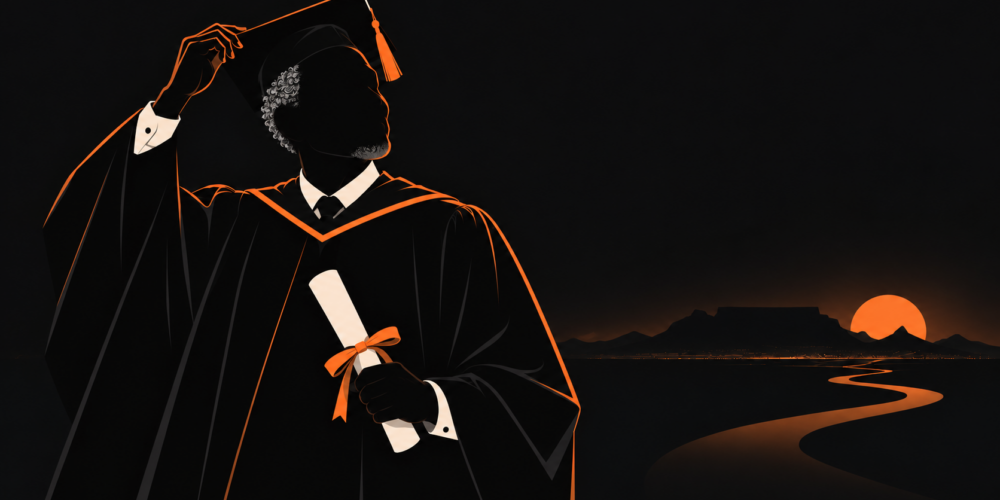
A respected friend told me how, even late in life, he invests in learning programmes to teach him new things and help him keep up with an ever-changing world.
Why does he bother? He is a Senior Counsel, with a long list of achievements behind him. He gave me the reason: he doesn’t want to be suggesting the Cafenol of his youth to people with new, critical ailments!
After I’d stopped laughing, we discussed the many reasons a human should keep learning, even to the final stages of life. May I list them for you?
First, we don’t know what we don’t know, and we don’t know a great deal! You are on a fool’s errand if you ever say to yourself: I know so much. The far smarter position—regardless of accolades and accomplishments—is the Socratic one: to know how much you do not know. Everything can be challenged; everything might have to be rethought. What we call knowledge is often only our best conclusion so far.
Second, what you know may belong to times past. For example, the collision of AI and Gen Z in the workplace is flaying many of our old certainties about work and workplaces. Those bonded to past convictions may make critical errors of judgment about the world that’s now loading.
And the last reason to be an eager learner all your life? Who do you think you are, if learning is not for you? We are, all of us, deluded ignoramuses much of the time. Don’t fight that brutal fact; embrace it. Only the recognition of our own inadequacies leads to growth. Pomposity and arrogance are for the feeble-minded; the truly wise know how little they know.
Formal, taught learning is only a small part of the picture. That may give us fresh skills and knowledge, but far deeper is the ability to learn through living, in the everyday thrum of experience. That requires humility, though, and for the learned, staying humble is often the hardest thing. They can become too smug to acknowledge being surprised. Yet surprise is where new knowledge begins.
Let’s take a poetic turn. The Urdu poet Faragh Rohvi wrote something that has always stayed with me, but I understand it better now, when old enough to look back. It is called Dekha Jo Aina (“When I saw the mirror”), and was sung beautifully by the late Jagjit Singh. Faragh could see himself in that mirror, but could not meet himself.
In other words, the person one thought oneself to be may not be.
The recurring refrain in every verse is “and I had to think again.” A crack is opened in what seemed settled.
You thought you knew yourself. And yet.
You thought you understood what you loved. And yet.
You thought you comprehended the world. And yet.
You thought you knew your flaws. And yet.
Having to think again is an ethic of mind: never confuse a conclusion with the end of thought. A wise person’s conclusions are always revisable.
I was sure. Something happened. I had to think again.
We spend our lives trying to become wiser. We read, observe, accumulate experience, notice patterns, reach conclusions. Eventually some of those conclusions harden into convictions. And then comes the dangerous little moment when wisdom begins to admire itself.
The biggest block then will be your own ego, your vanity, your self-regard. You will become over-invested in your own certitudes, because you have made them your core identity. And then all learning will end.
THE SIGNAL IN THE NOISE
Wisdom says: I have thought about this. Arrogance says: there is nothing more to think about.
Buy Sunny Bindra's new book
The X in CX
here »




Popular Posts
 The mathematics of a good lifeSeptember 27, 2026
 When nothing goes wrong, but you’re still in troubleOctober 4, 2026
 Must everything have a purpose?October 11, 2026
 Your culture may be your real strategyOctober 18, 2026