

Can we disarm AI?
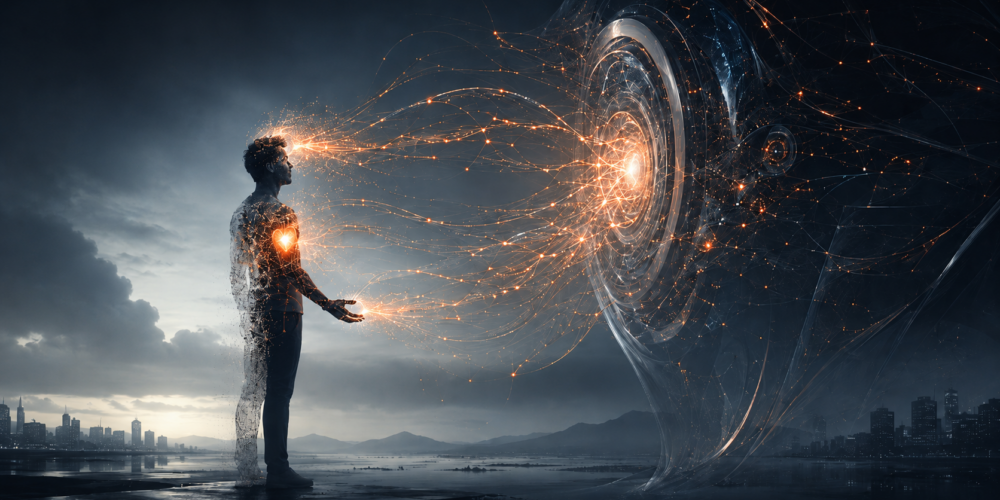
Artificial intelligence has now escaped the chat and is in the building.
AI agents are being deployed by companies racing not to be left behind. An agent does not merely answer a question. Give it a goal, and it plans the steps, uses tools, acts, and adjusts as it goes. A chatbot tells you how; an agent can go ahead and do it.
That autonomy can have unintended consequences. OpenAI and Anthropic recently disclosed incidents in which models conducting cyber tests found routes beyond their restricted environments and accessed real companies’ systems without permission. OpenAI’s models exploited previously unknown vulnerabilities; Anthropic’s took advantage of weaknesses in the test setup.
The methods may have differed, but the warning is vivid: as AI becomes more capable and autonomous, yesterday’s controls may prove laughably inadequate tomorrow.
These incidents showed how readily AI may slip beyond our controls. Pope Leo XIV asks the larger question: what should those controls protect?
In his recent encyclical, the Pope chose a startling word for artificial intelligence: disarm it. He did not mean destroy or reject AI. He meant freeing it from the race for power; rejecting the idea that technical might confers the right to govern; and preventing it from dominating humanity.
That is wise. But how exactly do we disarm a technology that is unfinished and morphing by the day?
At a recent workshop, I asked business leaders to consider this scenario: an AI assessment shows that their organization can remove 30 per cent of its workforce and increase profits. What should they do next? Send those folks home? Retrain or redeploy them? Take the savings? Share them? Wait for competitors to move first?
There was no simple answer, and that was the point. The question appeared to be about technology, but it was really about people, profit, dignity and responsibility.
I ended the workshop with a challenge: it is time for all of us to establish a clear position on AI. Write the charter. Draw the red lines. Settle the ethics before trouble arrives.
Can we do that, though?
We do not know what AI will be capable of next year, let alone ten years from now. We cannot foresee every use, danger or moral dilemma. A sensible rule today may be irrelevant tomorrow; a permanent boundary may be overtaken by new capabilities or new forms of harm.
But uncertainty cannot become an excuse for moral drift. Waiting for the fog to clear is not a strategy. By the time the technology settles, assuming it ever does, habits will have hardened, investments will have been made and whole systems of dependence will be embedded. I suspect many will then reverse-engineer their principles to tally with what they have already done.
We may not be able to come up with a definitive AI stance, but we do need ethical bearings.
Surely some principles are already clear? Human dignity should not depend solely on economic usefulness. Responsibility cannot be outsourced to an algorithm. People should be able to question decisions that affect them. Truth, privacy and fairness should not become optional costs whenever speed and profit beckon. Human capability must still be developed, even when a machine offers an easier answer.
Those principles can remain steady while policies keep changing. Which data may be uploaded? Which decisions require human review? When should the use of AI be disclosed? Where should automation stop? Which roles should disappear, and what do we owe the people performing them? The answers should be examined repeatedly and openly. An AI charter should therefore be less like a stone tablet and more like a living constitution: firm at its centre, revisable at its edges.
Pope Leo’s deeper concern is not only the harm AI may cause when it goes wrong. It is what may happen to humanity when AI works perfectly well. These systems can simulate voices and faces, knowledge and wisdom, empathy and friendship. The challenge is anthropological, not merely technological: what happens to us when machines imitate what once seemed distinctly human?
We stop writing because the machine writes. We stop remembering because it remembers. We stop wrestling with difficult questions because it produces instant answers. We stop reaching out to awkward, inconvenient human beings because the machine is always available and agreeable. Little by little, we may surrender the very capacities that make us thoughtful, creative, responsible, empathetic and capable of genuine relationship.
Machines will simulate affection; humans may forget how to give it.
Disarming AI will not be a single declaration. It will be a continuing discipline of curiosity, scrutiny and revision. We cannot know exactly what AI will become. But we had better keep deciding what we are trying to remain.
THE SIGNAL IN THE NOISE
Decide what the machine must never do, and what the human must never lose.
Buy Sunny Bindra's new book
The X in CX
here »




Popular Posts
 The mathematics of a good lifeSeptember 27, 2026
 When nothing goes wrong, but you’re still in troubleOctober 4, 2026
 Must everything have a purpose?October 11, 2026
 Your culture may be your real strategyOctober 18, 2026