

Pay attention like the Japanese
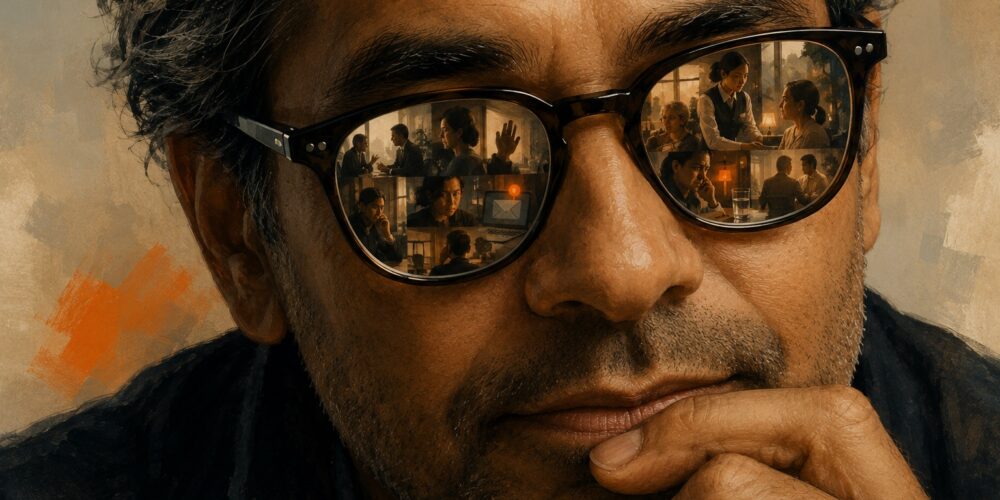
Do you know how to pay attention? The Japanese do.
From a very young age, many Japanese people learn to notice what is not being said. They call it kuuki wo yomu: reading the air.
Anish Moonka explained it on Twitter (OK, X if you must). Reading the air means noticing tone, posture, and tiny habit shifts—without a word being uttered. Because Japan is a high-context culture, people learn to watch for cues, notice clues, and understand what is happening beneath the surface.
A linked concept is omotenashi, the Japanese spirit of hospitality. It means giving your guest your full consideration. This goes deep: in its highest form, if the guest has to ask for something, the host has already failed! That spirit can be seen spread across many customer-facing trades: inns, restaurants, shop. And homes.
There is a shadow side, of course. Reading the air can become fear of disturbing it. Cultures that prize harmony can also punish necessary dissent. But still, there is something powerful here.
Most of the time we are surrounded by people who are physically present but perceptually absent. They hear words, but miss tone. They see faces, but miss fatigue. They attend meetings, dinners, funerals, family moments, but fail to notice the atmosphere shifting.
Many leaders are terrible readers of air. They enter rooms that are full of fear, fatigue, irritation or cynicism, and deliver the deck anyway. Business leaders often think attention means monitoring data. But some of the most important signals do not arrive in spreadsheets. They arrive in body language, hesitation, vague agreement, brittle laughter, and side glances.
We could use this Japanese doorway to understand customer experience better, too.
A hotel notices a guest always asks for extra water, and places it there in the room before the next stay.
A bank sees repeated confusion around a process, and redesigns it before the complaints pile up.
A restaurant server notices a customer looking around, and arrives before the wave.
A lawyer notices anxiety rising in a client and sends an update before the client chases.
All those are CX wows. And all those are rare.
There’s a strategy lesson embedded in attention as well. Strategy begins in noticing weak signals, the ones no one else is clocking. Is the social mood of the nation changing? Are employees becoming edgy? Is new technology creating tiny tremors? Are customers gently altering their old habits?
Most strategic failure is not a failure of intelligence. It is a failure of attention. The clues were present, but no one watched them with enough seriousness. Strategy is the art of noticing early what others will only understand later.
In this increasingly AI-obsessed world, attention is becoming rarer, not more common. The machine can scan, assess, summarize, generate. But can it really answer the deeper question: what’s really happening here? What are the humans not saying, or saying only through the subtlest of cues?
The machine can read the data. The human must still read the air.
Now let’s throw all business talk out of the window, and just focus on everyday human life.
What a lovely pair of attributes to have: to be highly observant, and to be highly attentive. Many of the world’s deepest thinkers and writers possess exactly those qualities. They read the air, and give the world around them their fullest attention. Then their impact arrives.
The other side of this is to be unconcerned about anyone else, and casual in observing the things that matter. That is a life both self-centred and shallow.
THE SIGNAL IN THE NOISE
The deepest people, and the best organizations, notice before others do.
Buy Sunny Bindra's new book
The X in CX
here »




Popular Posts
 The mathematics of a good lifeSeptember 27, 2026
 When nothing goes wrong, but you’re still in troubleOctober 4, 2026
 Must everything have a purpose?October 11, 2026
 Your culture may be your real strategyOctober 18, 2026